
In the Pacific Northwest, we’re no strangers to unpredictable weather—from windstorms that knock out branches to heavy snow that snaps lines. When the power goes out, your home quickly goes from a place of comfort to a cold, dark, and stressful environment.
A whole-house generator is essentially your insurance policy against that stress. It keeps your refrigerator running so your groceries don’t spoil, keeps the lights on so you aren’t stumbling around with candles, and ensures your medical equipment stays operational. Plus, it powers the Wi-Fi and the TV, so you can stay connected while your neighborhood sits in darkness.
At Puyallup Heating & Air Conditioning, we’re the hometown experts in helping families throughout South Hill, WA, Puyallup, Bonney Lake, and the rest of Pierce County stay prepared. If you’ve been searching for a professional generator installer near South Hill or any of the surrounding communities, our team is ready to help.
How Whole-House Generators Work
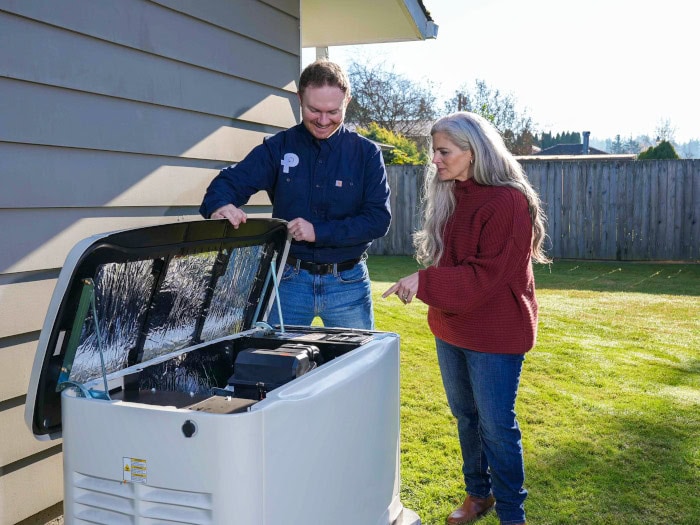
Whole-house generators (often called standby generators) aren’t like the ones you see at a construction site or a campsite. These are permanent fixtures that sit on a concrete pad outside your home, much like an AC unit.
The Automatic Transfer Switch
What makes these systems so special is the Automatic Transfer Switch (ATS). When the power goes out, the generator detects the disruption in the current instantly. Within seconds, it disconnects your home from the utility grid and begins sending electricity directly to your panel.
Runs on Natural Gas or Propane
Unlike portable units that require you to go out in the rain to refill them with gasoline, a whole-house generator is piped directly into your home’s natural gas or propane line. This means it can keep your home powered for days on end until the local electric company restores service. You don’t have to lift a finger; the system handles everything.
Standby vs. Portable Generators: What’s the Difference?
We often get asked if a portable generator is good enough. While portable generators are fantastic for camping or tailgating, they aren’t designed to run a modern household.
- Portable generators are meant for individual items like a single lamp or a small appliance. A standby generator is sized to handle your HVAC system, sump pump, lights, and appliances all at once.
- They are more prone to overheating or energy overloads. They also produce carbon monoxide, meaning they have to be placed far from the house. A standby unit is professionally installed, vented, and much safer for long-term use.
- If the power goes out while you’re on vacation or at work, a portable generator does nothing. A whole-house system kicks on automatically, ensuring your food doesn't spoil, pipes don’t freeze, and your sump pump keeps your basement dry even if you aren’t home.
- Because they are permanent upgrades, standby generators actually increase your home’s resale value.
Whole-House Generator Installation
Looking for a major upgrade to your home? Our team at Puyallup Heating & Air Conditioning is just a phone call away. Installing a generator in South Hill, WA, requires careful planning because no two homes use energy in the same way.
We take a detailed look at your appliances and your must-have items—whether that’s a central furnace, an electric range, or medical equipment—to calculate exactly what size unit you need. We want to be sure we find a solution that fits your home perfectly and stays within your budget. We also offer flexible financing options (subject to approved credit) to make the investment as easy as possible.
Contact Puyallup Heating & Air Conditioning for Whole-House Generators & Services by calling us at (253) 845-0581 or book online now!
Keeping Your Generator Ready for Action
Because your generator spends most of its life on standby, it can occasionally develop issues such as clogged fuel filters, battery failure, or coolant leaks. If you notice your unit making strange noises or failing its weekly self-test, our specialists are adept at problem-solving.
Generator Maintenance Tips
Your generator backs you up, so how can you back your generator up? An annual inspection is the best way to prevent a breakdown right when you need it most.
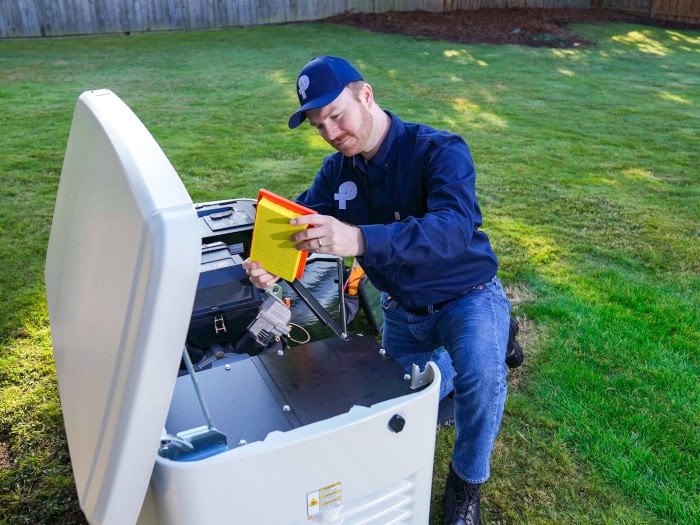
Think of it like your car: generators need regular oil changes, filter replacements, and spark plug checks. Many of the emergency repairs we see could have been avoided with a simple maintenance visit. When you join our Preventative Maintenance Agreement, we take the guesswork out of it—we’ll even call you when you’re due for a checkup.
Whole-House Generator FAQs
How do I know which size generator to buy?
It all comes down to loads. We calculate the total wattage of the appliances you want to run simultaneously. For some, that just means the fridge, lights, and furnace. For others, it means the whole house, including the pool pump and the dryer. We’ll help you tally it all up to find the perfect size.
How long can a whole-house generator run?
As long as it has a fuel source! Since most units are connected to your natural gas line, they can theoretically run for weeks. However, even with a steady fuel supply, the unit will eventually need a brief shutdown for an oil change if the outage lasts more than a few days of continuous run-time.
How many items can a whole-house generator power?
Depending on the size you choose, it can power everything in your home. Most homeowners opt for a unit that covers the vitals (HVAC, refrigeration, sump pumps, and kitchen outlets), but a whole-house generator can keep your entire life running as if the power never went out.
Does it make a lot of noise?
Modern standby generators are surprisingly quiet. They are housed in sound-attenuated enclosures that make them about as loud as a standard central air conditioning unit. Your neighbors won’t even notice it's running.
Install Your Whole-House Generator Today!
Don’t wait for the next big storm to realize you need a backup plan. Puyallup Heating & Air Conditioning is proud to offer our expertise and years of neighborly service to the South Hill, WA, and greater Pierce County community. We’ll walk you through the options, handle the permits, and ensure your home is the one on the block with the lights still on.
Call us today at (253) 845-0581 or book online to schedule your free consultation!